Site Information

Categories

 Loading... Please wait...

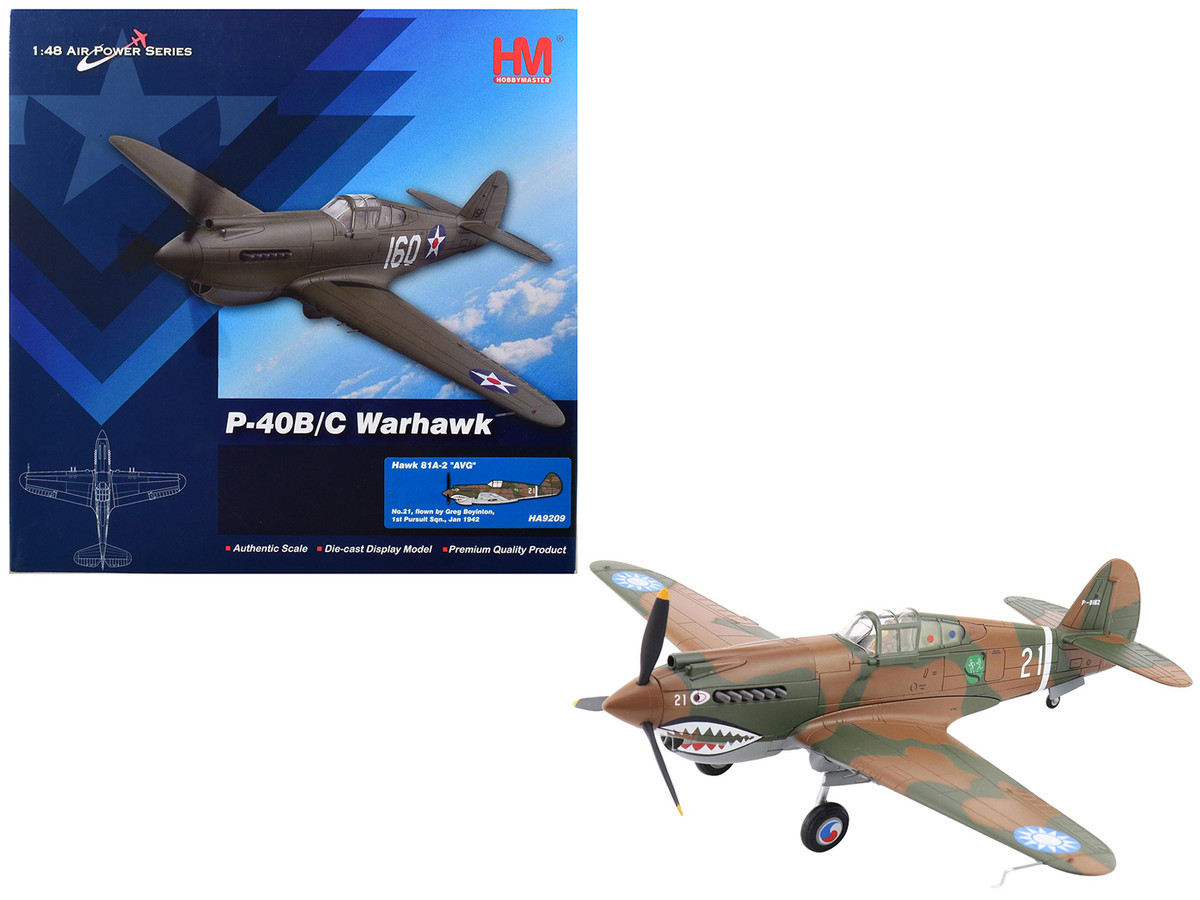
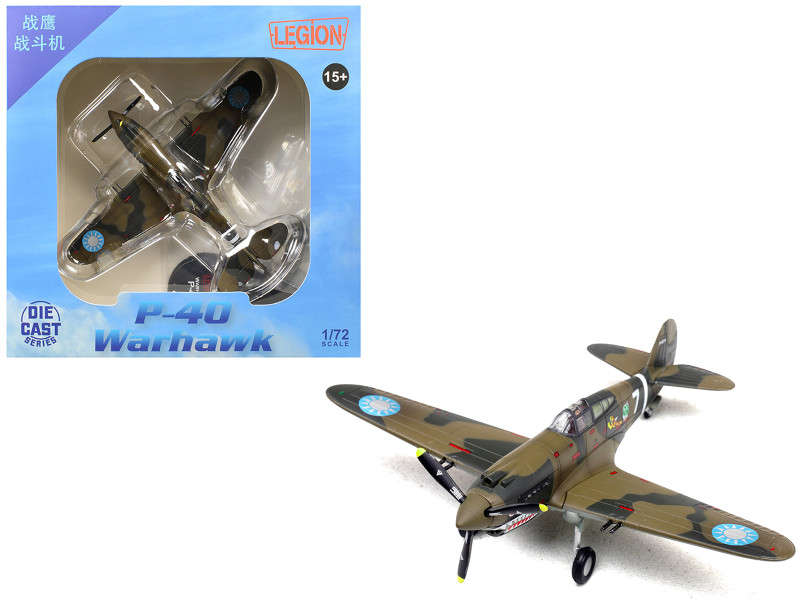
Curtiss P-40B Hawk 81A-2 Fighter-Bomber Aircraft "No. 21 Gregory Boyington 1st Pursuit Squadron" (1942) American Volunteer Group in China "Air Power Series" 1/48 Diecast Model by Hobby Master

(You save $52.50)
SKU:
HA9209
QTY:

Product Description

  • Brand new 1/48 scale diecast model of Curtiss P-40B Hawk 81A-2 Fighter-Bomber Aircraft "No. 21, Gregory Boyington, 1st Pursuit Squadron" (1942) American Volunteer Group in China "Air Power Series" die cast model by Hobby Master.
  • Brand new box.
  • Detailed exterior.
  • True-to-scale detail.
  • Has opening canopy.
  • Includes display stand.
  • Officially licensed product.
  • Manufacturer's original unopened packaging.
  • Dimensions approximately Length- 8.25, Wingspan- 9.25 inches.
  • Diecast metal and plastic construction for durability and a heavy, realistic feel.
  • It is a highly detailed and accurate model, perfect for collectors and enthusiasts of military history.
  • Realistic panel lines, antennas, access panels, and surface details for an authentic representation of the real-life airplane.
  • HISTORY ASPECTS:
  • The Curtiss Hawk 81A-2 No. 21, serial P-8182, was flown by Gregory “Pappy” Boyington while he served as a flight leader with the American Volunteer Group (AVG), better known as the Flying Tigers. Assigned to the 1st Pursuit Squadron, nicknamed the “Adam and Eves,” Boyington flew the shark-mouthed fighter during the AVG's early operations in China and Burma. In January 1942, the squadron was helping defend China against Japanese air attacks while also supporting the Allied effort to protect the vital Burma Road supply route.
  • The AVG's primary mission was to protect Chinese cities, airfields, and supply lines from Japanese attacks. Its pilots relied on tactics developed by their commander, Claire Chennault, who emphasized attacking from above, using the P-40's diving speed and firepower rather than engaging Japanese fighters in prolonged turning battles. The aircraft's Allison V-1710 liquid-cooled engine, rugged construction, and six machine guns made it a capable opponent when flown to its strengths. Its distinctive shark-mouth nose art, inspired by RAF Tomahawks in North Africa, became one of the most recognizable markings of the Flying Tigers.
  • Boyington's January 1942 service included the defense of Rangoon, Burma, against Japanese air attacks. He joined the AVG detachment there on January 25 and flew his first combat mission the following day. On January 29, he participated in another interception against Japanese Ki-27 fighters, although he was not officially credited with an aerial victory from that engagement. His later AVG record included two credited aerial victories over Japanese fighters on February 6, 1942, and participation in the March attack on the Japanese airfield at Chiang Mai, Thailand. His personal claims and official credits differed, so the aircraft's No. 21 identity should not be confused with a confirmed list of individual victories.
  • The Hawk 81A-2 was part of the AVG's contribution to the wider Second Sino-Japanese War and World War II. The Flying Tigers fought Japanese forces over China and Burma, defending Kunming, Rangoon, and other strategic locations while attacking enemy airfields, aircraft, and ground positions. After Rangoon fell in March 1942, the AVG continued operations from bases in Burma and China, helping resist the Japanese advance toward the Chinese border. The AVG was disbanded on July 4, 1942, with many of its pilots and personnel transferring into the U.S. Army Air Forces. Boyington later returned to the Marine Corps and became famous as commander of VMF-214, the “Black Sheep” squadron, in the South Pacific.
  • This 1:48 scale model represents Gregory Boyington's Flying Tigers fighter with the 1st Pursuit Squadron in January 1942. Its shark-mouth nose art, AVG markings, and association with one of America's best-known Marine Corps fighter aces capture an important chapter in the early air war against Japan. It is a distinctive addition to collections of Flying Tigers aircraft, P-40 Warhawks, and World War II aviation history.

Share  :

Share to Facebook Share to Twitter Share to The Fancy Share to Pinterest Share to Pinterest Share to Pinterest